Remember When?
By Victoria Cho ’28
By Katy Su ’28
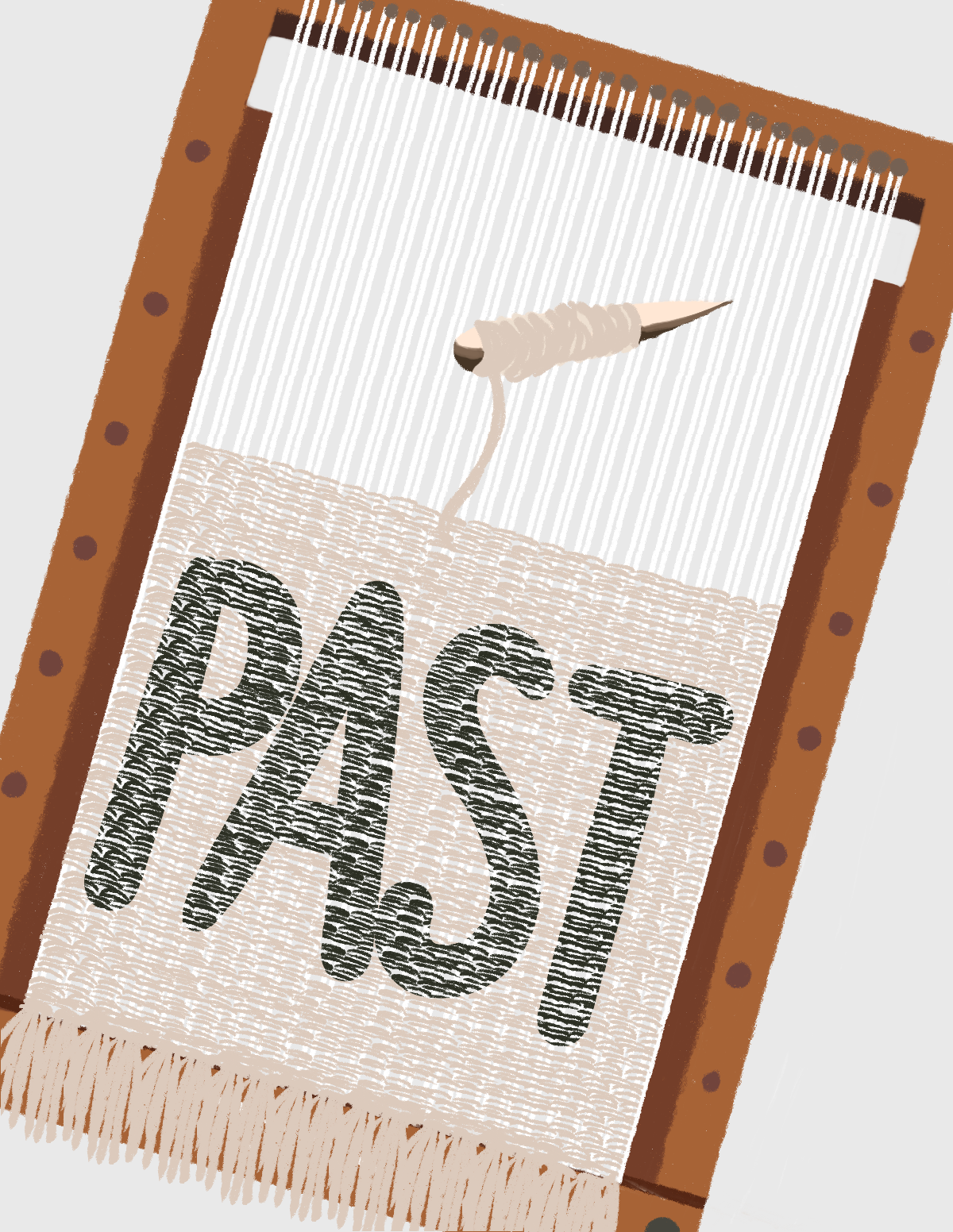
The past has never felt so present in recent years. From the return of low-rise jeans to digital cameras now becoming a necessity when taking pictures, the “nostalgic boom” that has taken over our generation is no longer just a concept, but a part of our lifestyle. Elements of the past and nostalgia have now become part of the modern aesthetic. Brands, of course, have noticed this trend and have come to utilize it to their advantage.
Through the advancement of social media and many digital marketing strategies, these huge brands appeal to customers through weaponizing memory. As a result, more than 50% of adults are likely to make a purchase when it makes them feel nostalgic for the past. Gen Z, too, is very responsive when it comes to nostalgic commodities, with 37% of them wanting to relive that era to some capacity despite most of the generation not even being alive during those times. [1]
So then, how and why does this work? Why do teens and adults in their early 20’s yearn for a sensation that didn’t even exist in their lifetime, and why do adults who deal with bigger issues and supposedly set the path to the future become so vulnerable and swayed by memories and the familiar? According to psychological research, our susceptibility to nostalgia lies beyond sentimentality. The National Library of Medicine states that “nostalgic consumption functions as an emotional compensation mechanism that consumers use to regulate or compensate for negative emotions brought about by complex social situations.” [2] In other words, engaging with the past relieves us from the hardships we face in the present. During times of instability, such as the political, social, and economic tension we are facing today, our human instincts naturally gravitate towards a time that seemed to feel safer and more peaceful, even if we didn’t experience it firsthand. Visually approaching this, Gen Z holds an even stronger desire for such an era, wanting to experience the care-free and simpler lifestyle. Thus, for fashion brands, technology companies, and even food chains, nostalgia becomes a form of language; selling not just their products, but a memory and a moment in time that makes a connection at a personal level.
Yet, as we continue to search for and revive the past, we must also question whether this pursuit limits our ability to imagine and create a novel future. With so much reuse of the past, there are apprehensions about whether our contemporary culture is unique enough for future generations to look back on with nostalgia. These concerns leave us with a central question: how do we move forward without remaining trapped in a cycle of repetition? The answer could lie in finding a balance between the past and the present or through discovering a new future as we linger within preserved traditions.
Footnotes
Wilson, Kimberly. “The Business of Nostalgia: How Brands Are Cashing in on Our Favorite Throwbacks.” Essence, July 14, 2025.
Song, Sigen, Min Tian, Qingji Fan, and Yi Zhang. “Temporal Landmarks and Nostalgic Consumption: The Role of the Need to Belong.” Behavioral sciences (Basel, Switzerland), February 8, 2024.
References
Song, Sigen, Min Tian, Qingji Fan, and Yi Zhang. “Temporal Landmarks and Nostalgic Consumption: The Role of the Need to Belong.” Behavioral Sciences (Basel, Switzerland), February 8, 2024. https://pmc.ncbi.nlm.nih.gov/articles/PMC10886383/#:~:text=Nostalgia%20consumption%20is%20mainly%20manifested,increase%20feelings%20of%20social%20connectedness.
Wilson, Kimberly. “The Business of Nostalgia: How Brands Are Cashing in on Our Favorite Throwbacks.” Essence, July 14, 2025. https://www.essence.com/news/money-career/business-of-nostalgia/.
“How Brands – and Capitalism – Killed Nostalgia.” The Drum. Accessed November 11, 2025. https://www.thedrum.com/opinion/how-brands-and-capitalism-killed-nostalgia#:~:text=%E2%80%9CDonna%20Karan’s%20’80s%20look.,want%20to%20continue%20the%20discussion.